𝗨𝗣𝗗𝗔𝗧𝗘𝗦 𝗛𝗘𝗡𝗡𝗘𝗦𝗦𝗘𝗬 𝗟𝗜𝗢𝗡𝗦 𝗖𝗟𝗨𝗕 𝗢𝗡 𝗙𝗘𝗗𝗘𝗥𝗔𝗟 𝗧𝗔𝗫 𝗣𝗢𝗟𝗜𝗖𝗬, 𝗡𝗢𝗡𝗣𝗥𝗢𝗙𝗜𝗧 𝗦𝗨𝗣𝗣𝗢𝗥𝗧, 𝗔𝗡𝗗 𝗖𝗢𝗡𝗚𝗥𝗘𝗦𝗦𝗜𝗢𝗡𝗔𝗟 𝗪𝗢𝗥𝗞
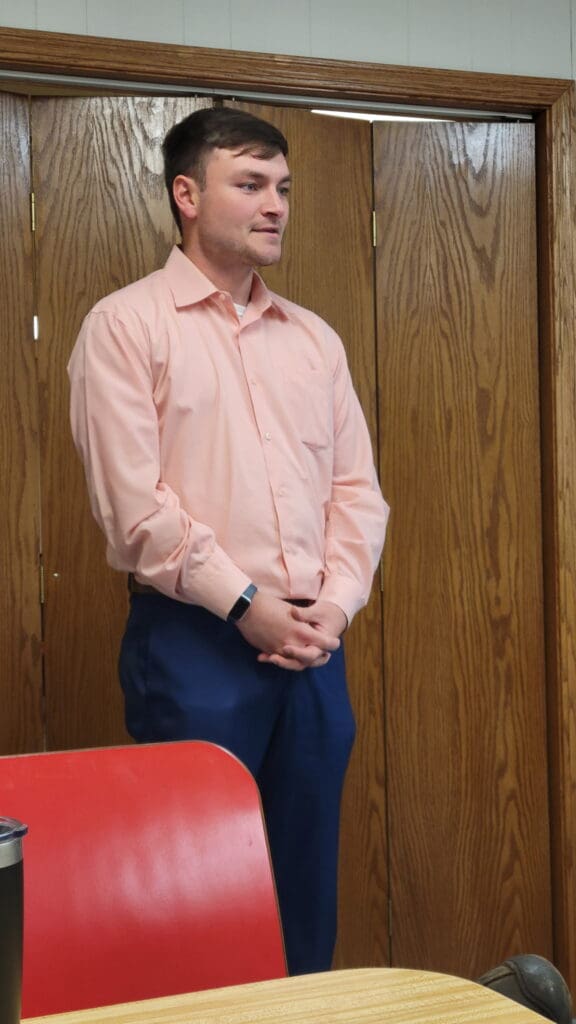
Peyton Burns, a Kingfisher native and staff member for U.S. Senator James Lankford, visited the Hennessey Lions Club on Thursday, December 18, to share an update on recent federal legislation and ongoing work in Washington.
Burns, who noted it had been some time since his last visit, said the past summer had been especially busy on Capitol Hill, highlighted by the passage of major tax legislation often referred to as the “big, beautiful bill.” The measure primarily focused on extending provisions of the 2017 Tax Cuts and Jobs Act that were scheduled to expire at the end of this year.
“Every one of those tax cuts had expirations,” Burns said. “If Congress hadn’t acted, tax brackets would have reverted to pre-2017 levels. Making those tax cuts permanent was a top priority.”
According to Burns, the legislation prevents automatic tax increases and provides long-term certainty for individuals, families, and businesses. He also emphasized provisions aimed at supporting nonprofits and churches, an issue he said became apparent after changes made in 2018.
When the standard deduction was increased, many low- and middle-income donors no longer itemized deductions, which meant charitable contributions could no longer be written off. Burns said this had a noticeable impact on nonprofit giving nationwide.
To address that issue, Senator Lankford worked to include portions of the Charitable Act in the tax package. The provision allows charitable donations to be deducted “above the line,” meaning donors can claim the deduction even if they take the standard deduction.
Under the new law, individuals may deduct up to $1,000 in charitable donations, while married couples may deduct up to $2,000.
“It’s a start,” Burns said. “We’d like to see those numbers higher, but it puts something back in place for nonprofits and churches that were hit hard after 2018.”
Burns said the change will take effect with the upcoming tax filing season, allowing taxpayers to deduct eligible nonprofit donations when filing 2025 returns.
Another key component of the legislation addressed business equipment depreciation. Burns explained that following the 2018 tax changes, businesses were required to spread equipment write-offs over several years instead of deducting them immediately.
“We heard from a lot of small businesses, farmers, and ranchers who said this was creating real problems,” Burns said.
The updated law restores immediate expensing for qualifying equipment purchases and makes the change permanent. It is also retroactive, allowing businesses still depreciating past purchases to apply the new rules.
Burns also touched on changes to federal assistance programs, noting new work requirements for certain SNAP and Medicaid recipients. He emphasized that the requirements would not apply to seniors or individuals with disabilities, but are intended to reduce fraud and encourage workforce participation among able-bodied adults.
In addition, the legislation included updates related to agriculture, with commodity prices increased across the board as part of ongoing farm bill efforts.
Looking ahead, Burns discussed recent frustrations surrounding a government shutdown in October, which lasted several weeks amid stalled appropriations negotiations. He said Senator Lankford continues to advocate for reform through the Prevent Government Shutdowns Act.
The proposal would automatically trigger short-term continuing resolutions if appropriations deadlines are missed, keeping the government open while requiring members of Congress to remain in Washington and focus solely on passing funding bills.
“The senator believes government shutdowns are unnecessary and disruptive,” Burns said. “This approach forces Congress to stay at the table and get the work done.”
Burns concluded by saying there is more legislative work ahead, including ongoing appropriations efforts and additional policy discussions in the coming year. photo by AAN Jack Quirk
About The Author
